
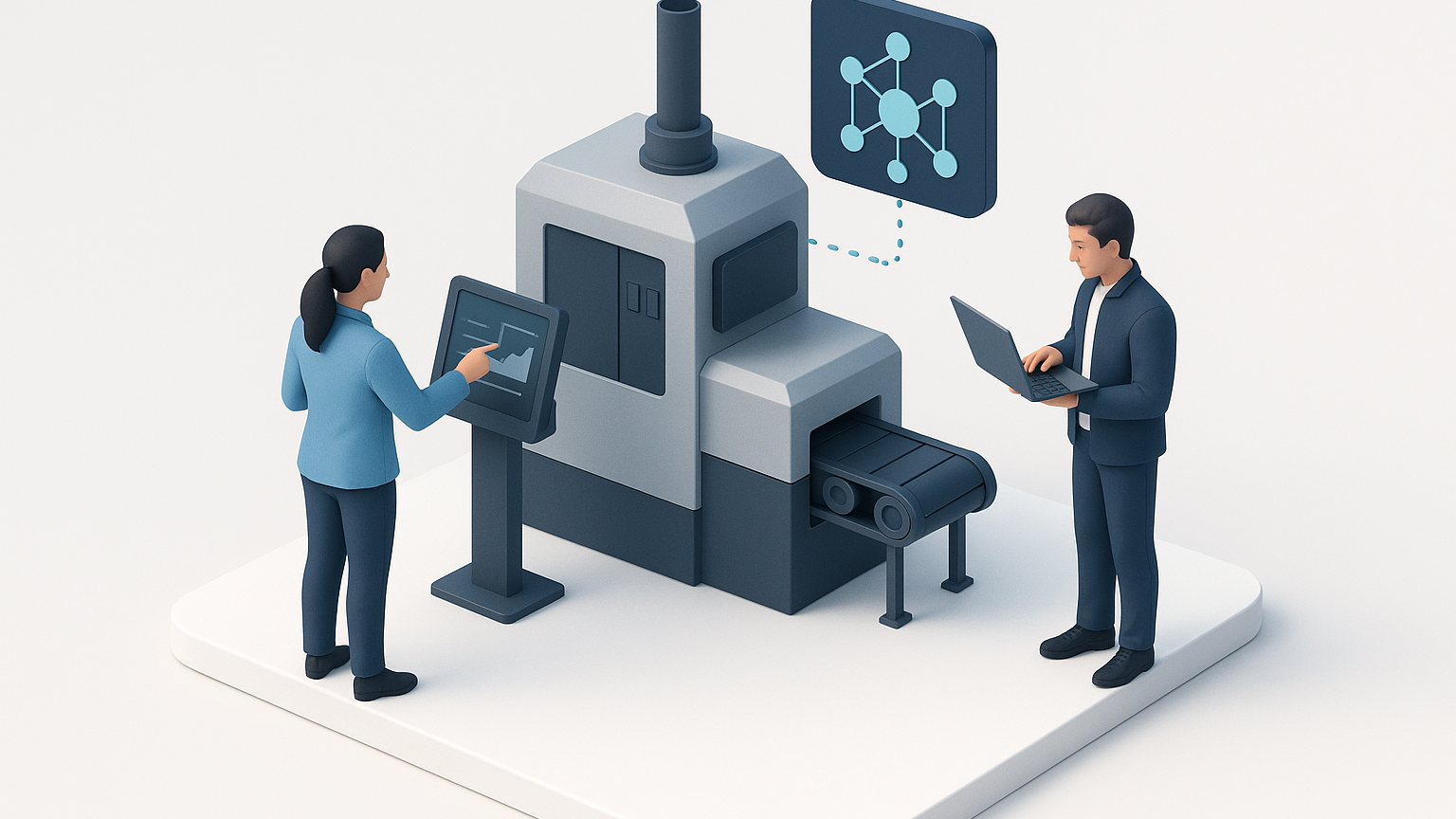
AI, IoT and RAG sound like three separate trends. In practice they unfold their value only where they come together at a real process: sensors deliver data, a knowledge system makes sense of it, AI turns it into an action. The first sensible use case is usually unspectacular.
What do AI, IoT and RAG mean together?
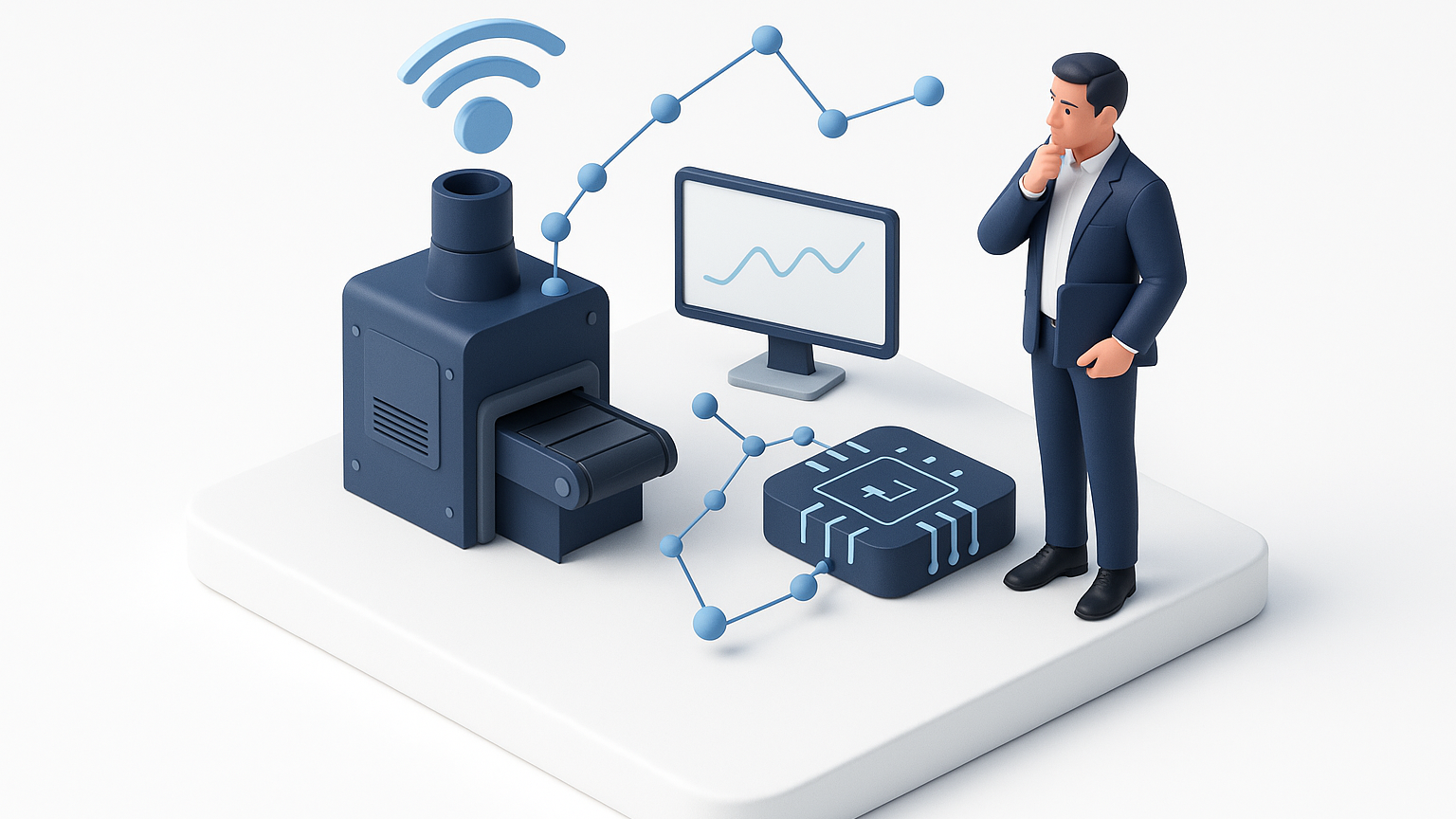
IoT stands for connected devices and sensors that continuously deliver data, for instance from a machine or a warehouse. RAG, short for retrieval-augmented generation, links a language model with your own documents and data so that answers rest on proven knowledge rather than guesswork. AI is the layer that turns this information into a decision or a suggestion. Only the combination creates value: a sensor reports a deviation, RAG fetches the matching maintenance guide, the AI proposes the next step.
Which use cases work in the Mittelstand?
According to a widely cited 2025 MIT study, AI delivers the biggest return not in marketing, where most budgets land, but in automating routines in the back office. Concretely that means: knowledge answers from internal documents via RAG, predictive maintenance from IoT data, or the automatic pre-qualification of recurring inquiries. Purchased solutions specialized for a process reach productive use about twice as often as broadly built general-purpose tools.
Why is the first use case often boring?
Because it has to be measurable. An unspectacular step with a clear metric, close to the existing process, can be compared before and after and proves that the investment pays off. The spectacular project sounds better but fails more often on unclear data and missing anchoring. We therefore deliberately start small and scale only after proven success.
Further reading
These articles help with the next decision.
- Understanding AI Agents: Practical Insights
- Why Medium-Sized Businesses Choose the Wrong AI Tools
- AI, ML and Deep Learning: Basics from Practice
What is RAG?
Retrieval-augmented generation links a language model with your own documents and data. Answers then rest on proven knowledge rather than guesswork, which reduces hallucinations.
How do AI, IoT and RAG fit together?
IoT delivers data from connected devices, RAG makes sense of it with your own knowledge, AI turns it into a decision or suggestion. The value comes from the combination at a real process.
Which AI use cases pay off in the Mittelstand?
Mainly back-office routines: knowledge answers via RAG, predictive maintenance from IoT data, or pre-qualifying inquiries. That is where studies find the biggest return.
Why start small?
Because a measurable, process-near step proves the value. Spectacular projects fail more often on unclear data and missing anchoring.