
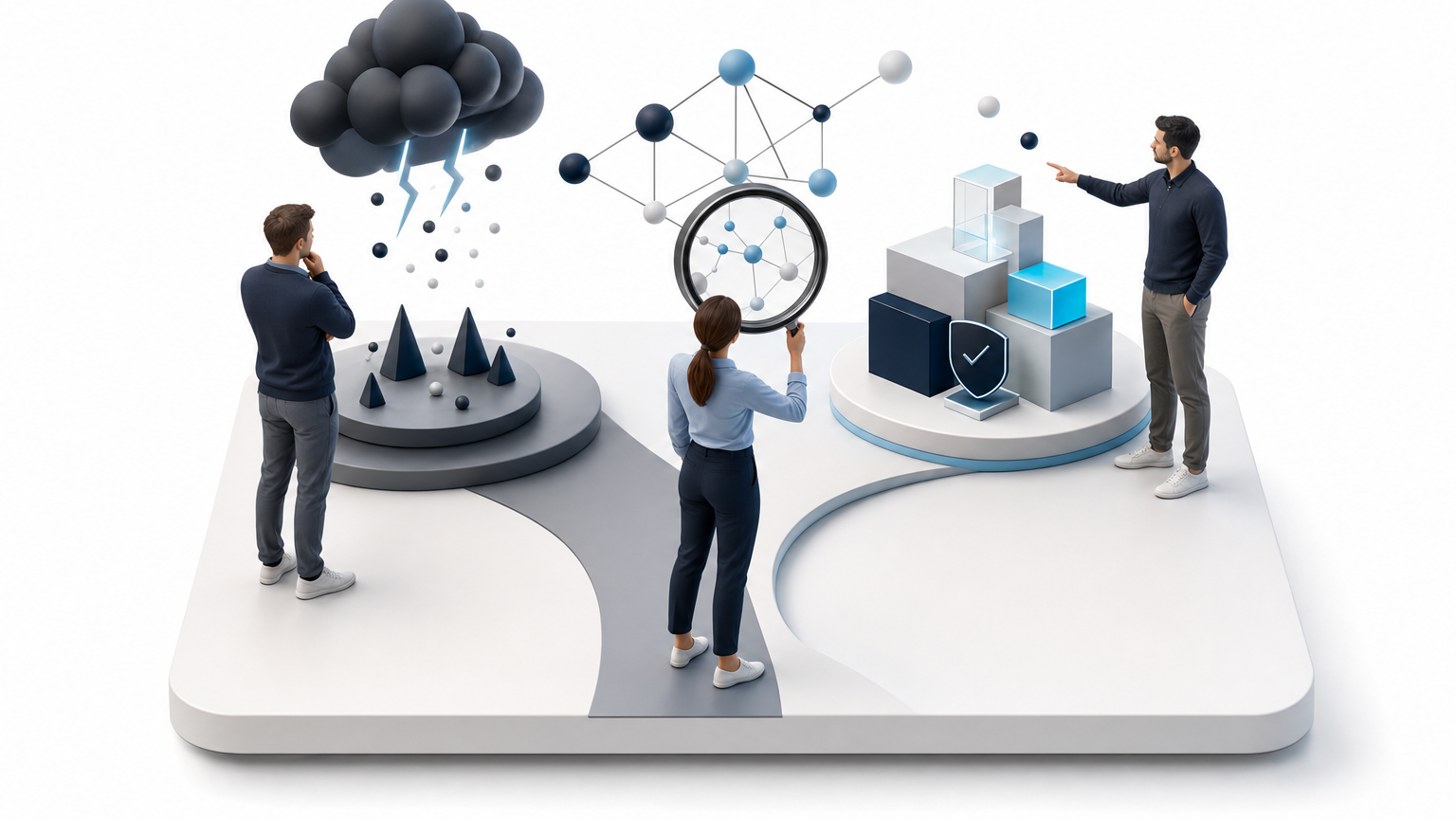
The best-known AI danger is the least likely. While headlines warn of the rebellious machine, the real harm is already happening elsewhere. Whoever knows the genuine risks can manage them rather than be distracted by a movie scenario.
The hyped danger: the rebellious machine
The most common image is an AI that develops its own consciousness and turns against people. For today's technology that is science fiction. Current systems pursue no goals of their own, they optimize a given task. The fixation on this distant scenario has a price: it pulls attention and budget away from the risks that already cause harm today.

Real danger 1: disinformation and deepfakes
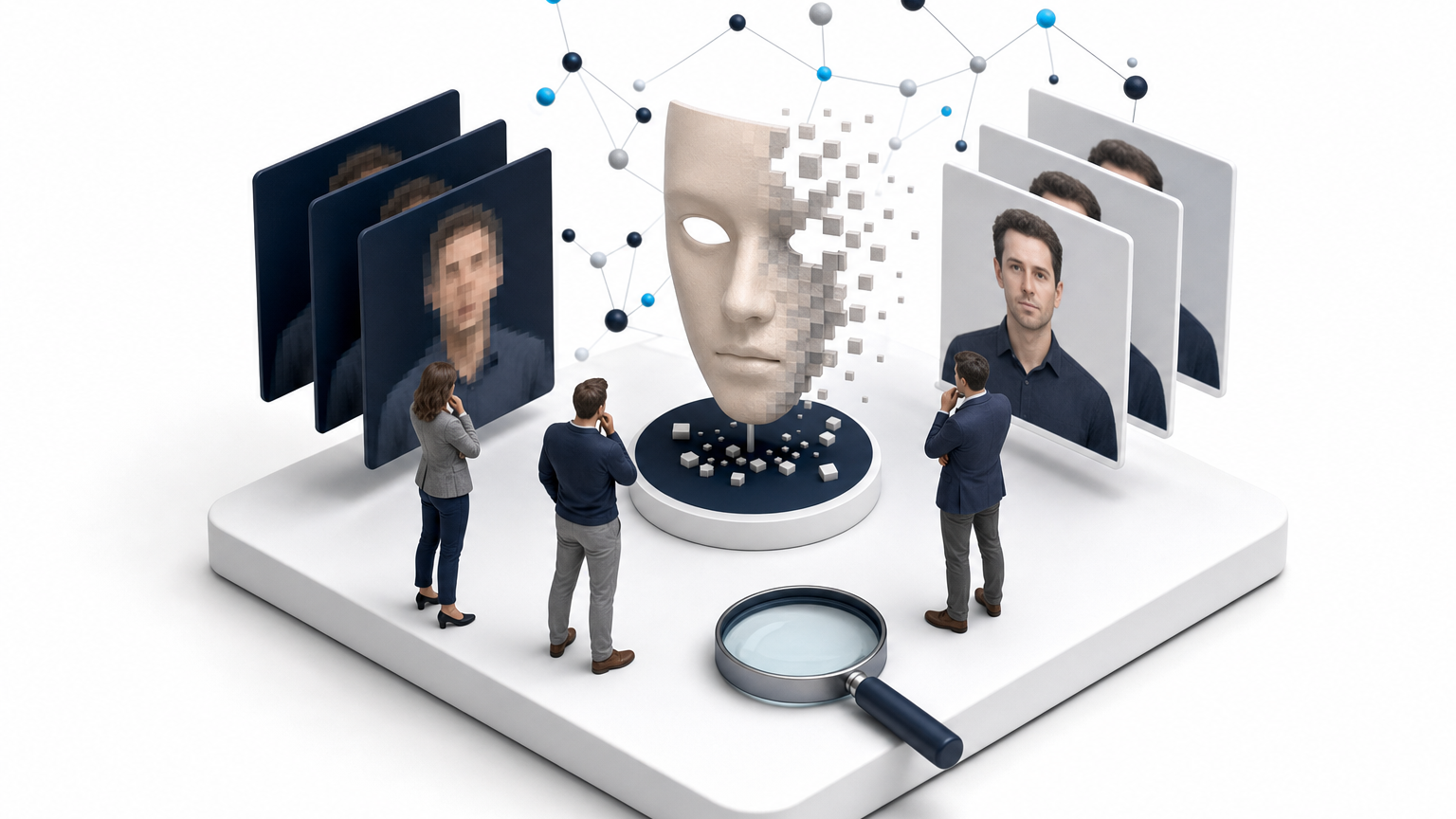
The most immediate danger is fabricated reality. The number of deepfakes circulating online rose from around 500,000 in 2023 to about 8 million in 2025. In one study only 0.1 percent of participants correctly told all real and fake content apart. The EU is responding: from 2 August 2026, AI content must be labelled and deepfakes disclosed, with fines of up to 15 million euros or three percent of global annual turnover.
Real danger 2: biased data and automated errors
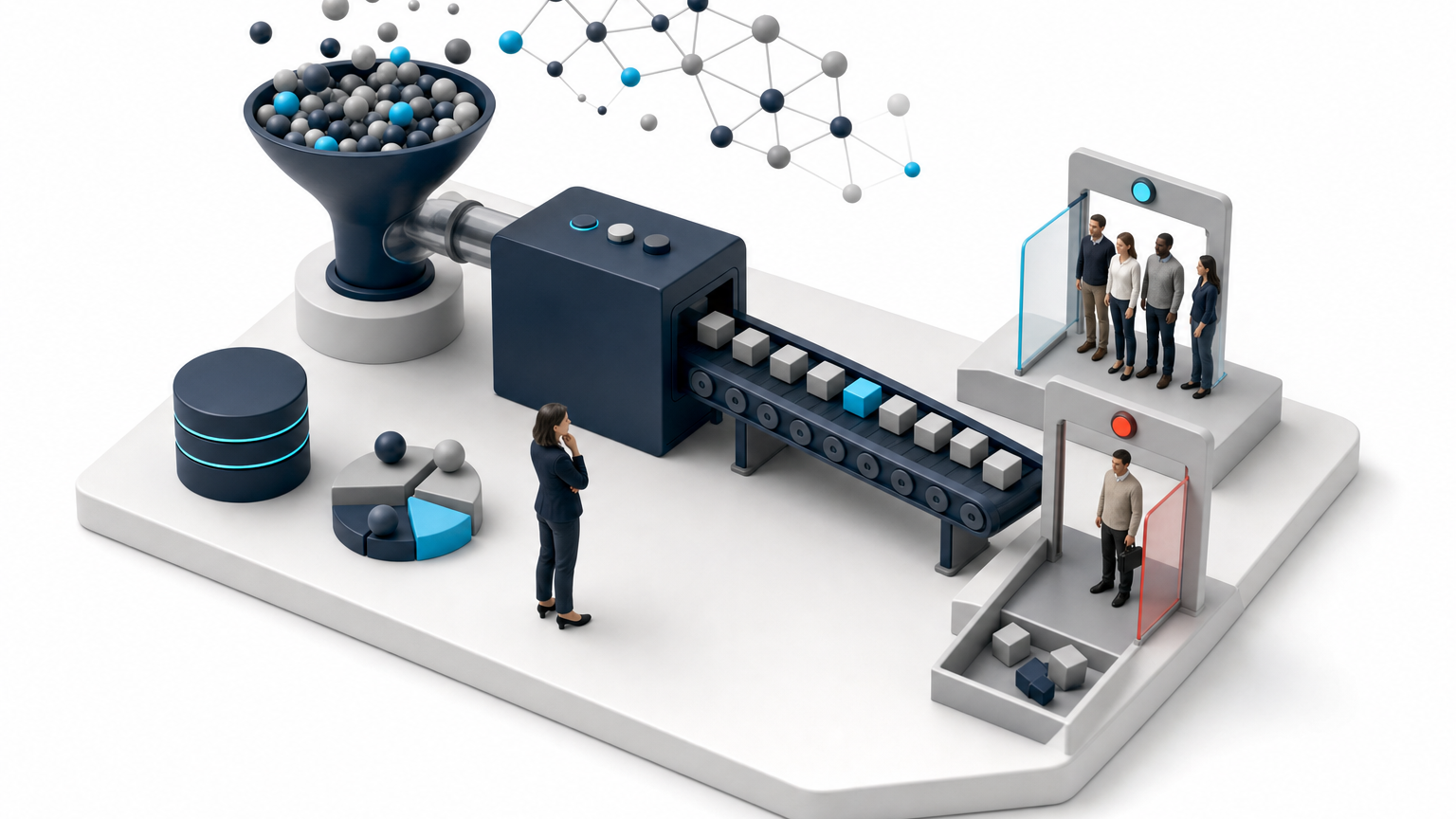
AI learns from data and inherits its slants. A model trained on one-sided data makes one-sided decisions, in hiring as in lending. The harm grows once such a decision runs automatically at scale. A single error becomes a systematic one. A human check at the right points stays indispensable.
Real danger 3: the upheaval of work
The change in the world of work is real and large. The World Economic Forum expects around 170 million new and 92 million disappearing roles by 2030, a net gain of 78 million. At the same time 39 percent of the core skills demanded today are set to change. The danger is no sudden collapse, but a displacement pressure for everyone who does not keep learning.
Real danger 4: concentration and dependence
The power behind AI is gathering in few hands. Building the infrastructure costs hundreds of billions, with the four largest cloud groups alone planning around 710 billion dollars of investment in a single year. Whoever rests their core processes on one provider becomes dependent on its prices and decisions. This quiet danger hits companies harder than any robot scenario.
How to manage the real risks
The good news: the real dangers are manageable. Label content, check data sources, let humans decide at consequential points, and avoid depending on a single provider. Whoever introduces AI with clear control points uses its strengths and limits its weaknesses. Fear of the distant machine does not help with that.
Further reading
These articles help with the next decision.
- AI Decisions: Efficiency Meets Transparency Obligations
- Understanding AI Agents: Practical Insights
- AI Jobs 2030: Which Careers Stay and Which Disappear
Is AI really dangerous?
Yes, but rarely for the reasons often cited. The rebellious machine is science fiction. Real risks are disinformation, biased decisions, the upheaval of work and dependence on few providers.
How big is the deepfake danger?
The number of online deepfakes rose from around 500,000 (2023) to about 8 million (2025). Only 0.1 percent of people reliably spot all fakes.
What does the EU AI Act change?
From 2 August 2026, AI content must be labelled and deepfakes disclosed. Violations cost up to 15 million euros or three percent of global annual turnover.
How do you manage the real AI risks?
Label content, check data sources, let humans decide at consequential points, and avoid depending on a single provider.