

Few topics polarise like the idea of an AI that surpasses humans in every respect. Between salvation and doom the sober view gets lost. For companies it is exactly this sober view that pays off, because it separates the speculative from the achievable.
What does superintelligence even mean?
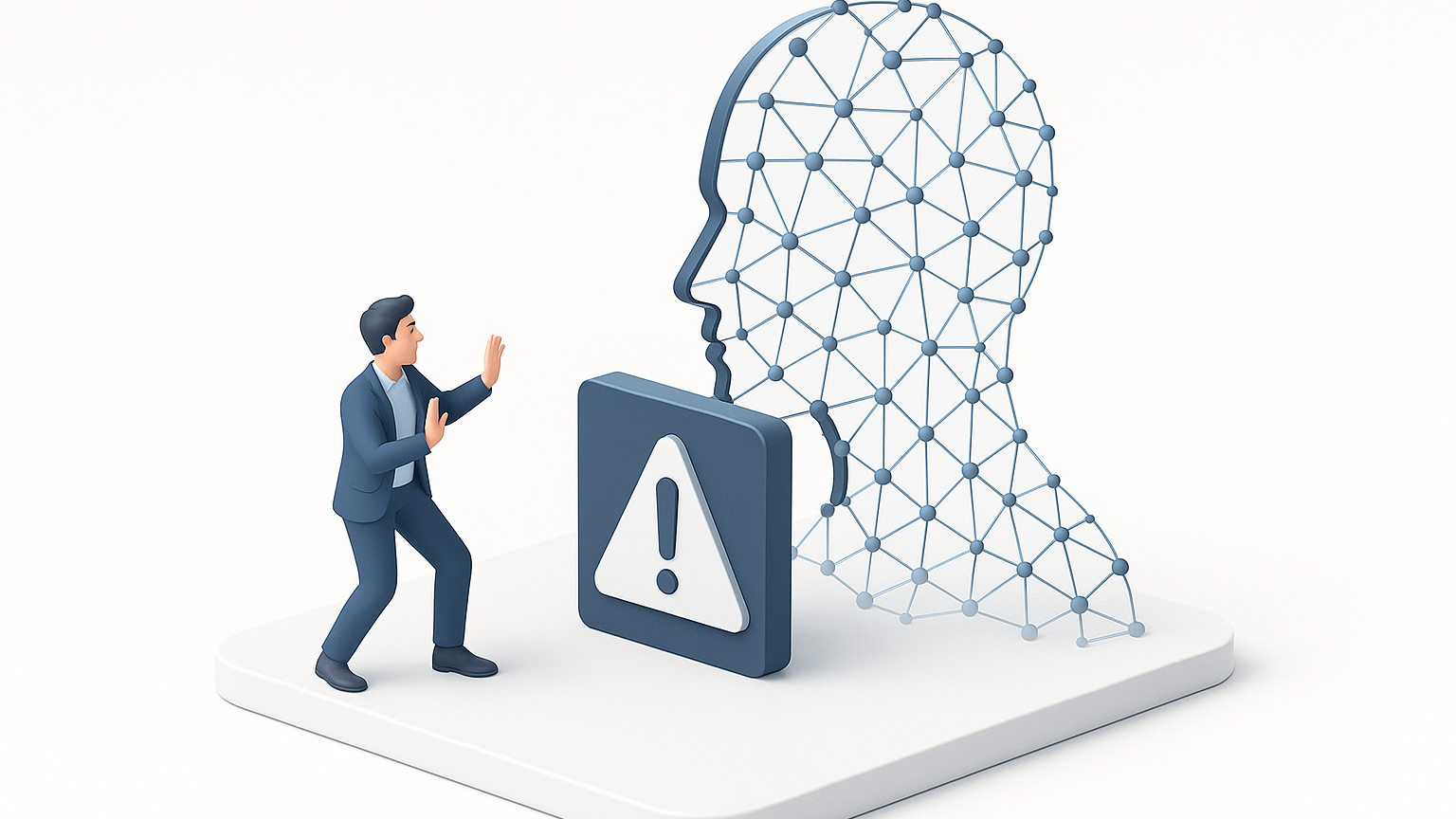
Superintelligence describes a hypothetical AI that far exceeds human abilities in almost all areas, including the ability to improve itself. Today's AI is far from that. Current systems are narrowly specialized: strong at pattern recognition, weak at genuine understanding and context. Even the jump from a convincing language model to reliably autonomous action is large, as the practice with AI agents shows.
How realistic is the scenario in the near term?
For the coming years superintelligence remains an open research question, not an operational topic. More telling are the real effects of today's AI on the world of work. The World Economic Forum's Future of Jobs report expects around 170 million new roles worldwide by 2030, while 92 million disappear, a net gain of 78 million. At the same time around 39 percent of the core skills demanded today are set to change. That is profound, but it is change, not loss of control.
What should SMEs focus on?
On the achievable. While the superintelligence debate makes headlines, competition is decided on unspectacular questions: which process can be measurably improved today? A widely cited 2025 MIT study shows that around 95 percent of AI pilots remain without measurable effect because they are not anchored in a process. Whoever puts their energy into the concrete gains more than anyone waiting for the next paradigm.
Further reading
These articles help with the next decision.
- AI Jobs 2030: Which Careers Stay and Which Disappear
- Understanding AI Agents: Practical Insights
- Rethinking Productivity at Work with ChatGPT
What is AI superintelligence?
A hypothetical AI that far exceeds human abilities in almost all areas and can improve itself. Today's systems are far from that.
How realistic is superintelligence in the near term?
For the coming years it remains an open research question, not an operational topic. Today's AI is narrowly specialized and not reliably autonomous.
What real effects does AI have on work?
By 2030 the World Economic Forum expects around 170 million new and 92 million disappearing roles, net plus 78 million, with 39 percent of core skills changing.
What should SMEs focus on?
On the achievable rather than the speculative: which process can be measurably improved today. That is where competition is decided.