

When people talk about artificial superintelligence, many picture a robot with a will of its own. The image misleads. More interesting than whether it arrives is the question of what form it might take. A sober look at the likely scenarios helps separate hype from substance.
What sets superintelligence apart from today's AI
Today's systems are narrowly specialized. A language model writes text but spots no tumors, a chess program plays no Go. Experts call this weak or narrow AI. A general AI would learn across tasks the way a human does. Superintelligence would go a step further and exceed human ability in almost all areas, including the ability to improve itself. Between today's state and that point lies a large, unsolved gap.

The likely path: from tools to agents
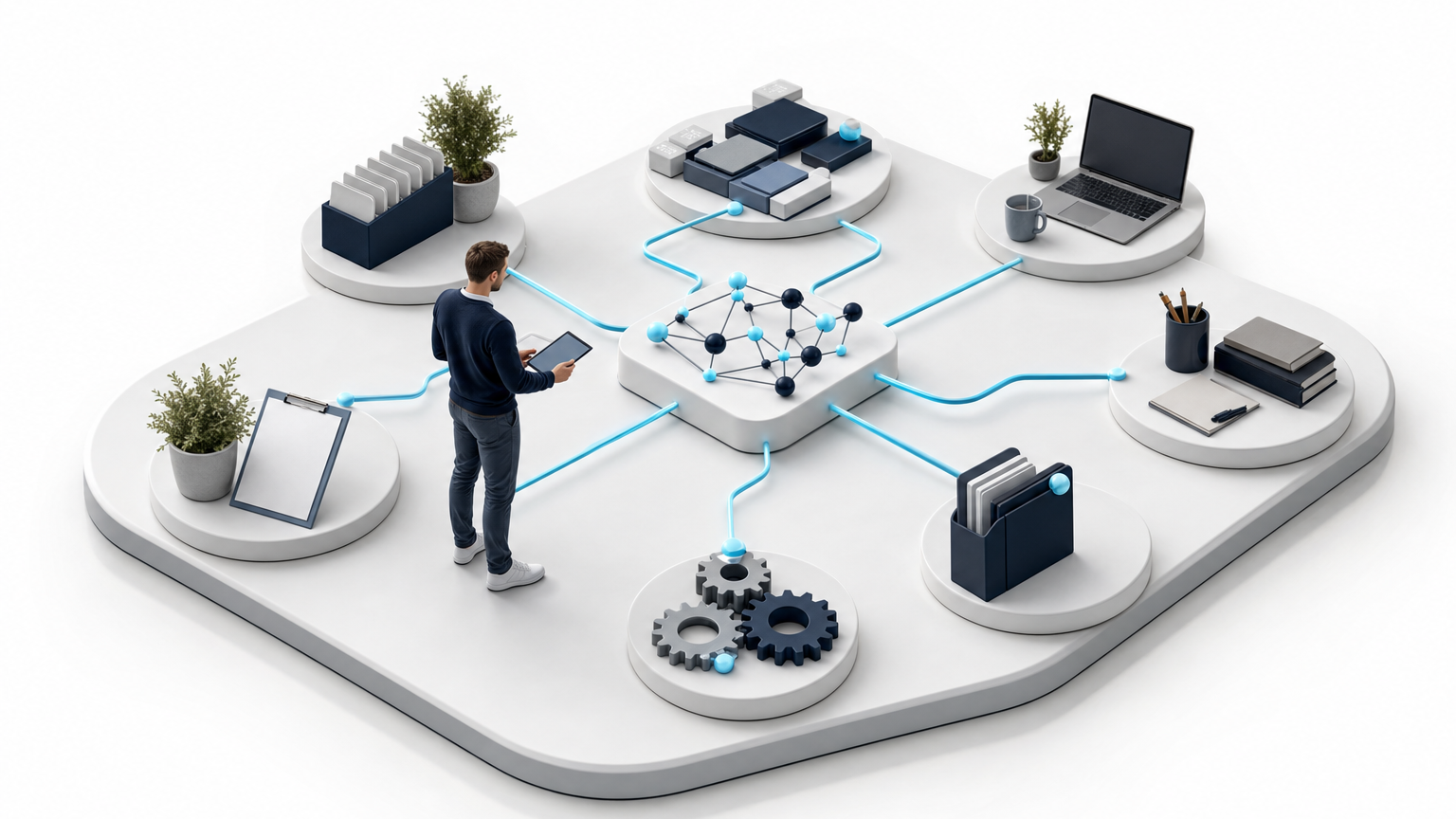
The next step is already visible. AI agents break a goal into sub-steps and work through them on their own. By 2028 around 33 percent of enterprise software is expected to contain such agentic functions, up from less than one percent in 2024. At least 15 percent of everyday work decisions could then be made autonomously. Any superintelligence would likely arrive as a dense web of such agents, embedded in software and infrastructure, not a single robot.
Recursive self-improvement as the core idea
The often-cited turning point is recursive self-improvement: a system that designs its own, better successor, which in turn designs a better one. In theory that could trigger a fast chain of jumps. In practice hard limits stand in the way, from compute and data quality to physical testing. Most serious voices see this as an open research question, an event without a date.
How it would feel day to day
A plausible superintelligence would be invisible. It would sit inside services that plan schedules, run supply chains and speed up research, without a face. The felt effect would be speed: decisions and drafts in minutes rather than weeks. The risk lies less in ill will than in missing control over many fast, connected decisions.
What is already real today
A gap separates the vision from daily life. Estimates suggest that by the end of 2027 more than 40 percent of agentic AI projects will be cancelled, mainly due to unclear costs and missing control. The technology is powerful and immature at once. Anyone talking about superintelligence today should keep the distance between an impressive demo and reliable operation in view.
What this means for companies
For the coming years superintelligence stays a research question, not a line in the project plan. Competition is decided on concrete, measurable use cases that already work today. Whoever gathers experience there is better prepared for any further jump than anyone waiting for the grand scenario.
Further reading
These articles help with the next decision.
- Is AI Superintelligence Realistic? A Sober Look
- Understanding AI Agents: Practical Insights
- AI Jobs 2030: Which Careers Stay and Which Disappear
What is artificial superintelligence?
A hypothetical AI that exceeds human ability in almost all areas and can improve itself. Today's systems are narrowly specialized and far from it.
What would superintelligence look like?
Likely a dense web of AI agents embedded in software and infrastructure, not a single robot. The felt effect would be mainly speed.
What is recursive self-improvement?
A system that designs its own, better successor. In theory a fast chain of jumps, in practice limited by compute, data and testing.
Should companies prepare for it?
Best through concrete, measurable AI use cases that work today. That builds experience for any further jump without waiting for a speculative scenario.