

AI videos have moved from experiment to everyday tool. A single line of text now becomes a finished clip in minutes, something that used to need a studio and a four-figure budget. Learn the workflow and you produce faster and cheaper without giving up quality.
What are AI videos and what are they good for?
AI videos are generated wholly or partly by generative AI: script, voice-over, avatar, editing and subtitles. They shine at short, repeatable formats such as ad clips for Meta and TikTok, product explainers or vertical social posts. Video dominates attention online and now accounts for more than 80 percent of internet traffic. That is exactly where speed decides reach.
Which tools do you need?
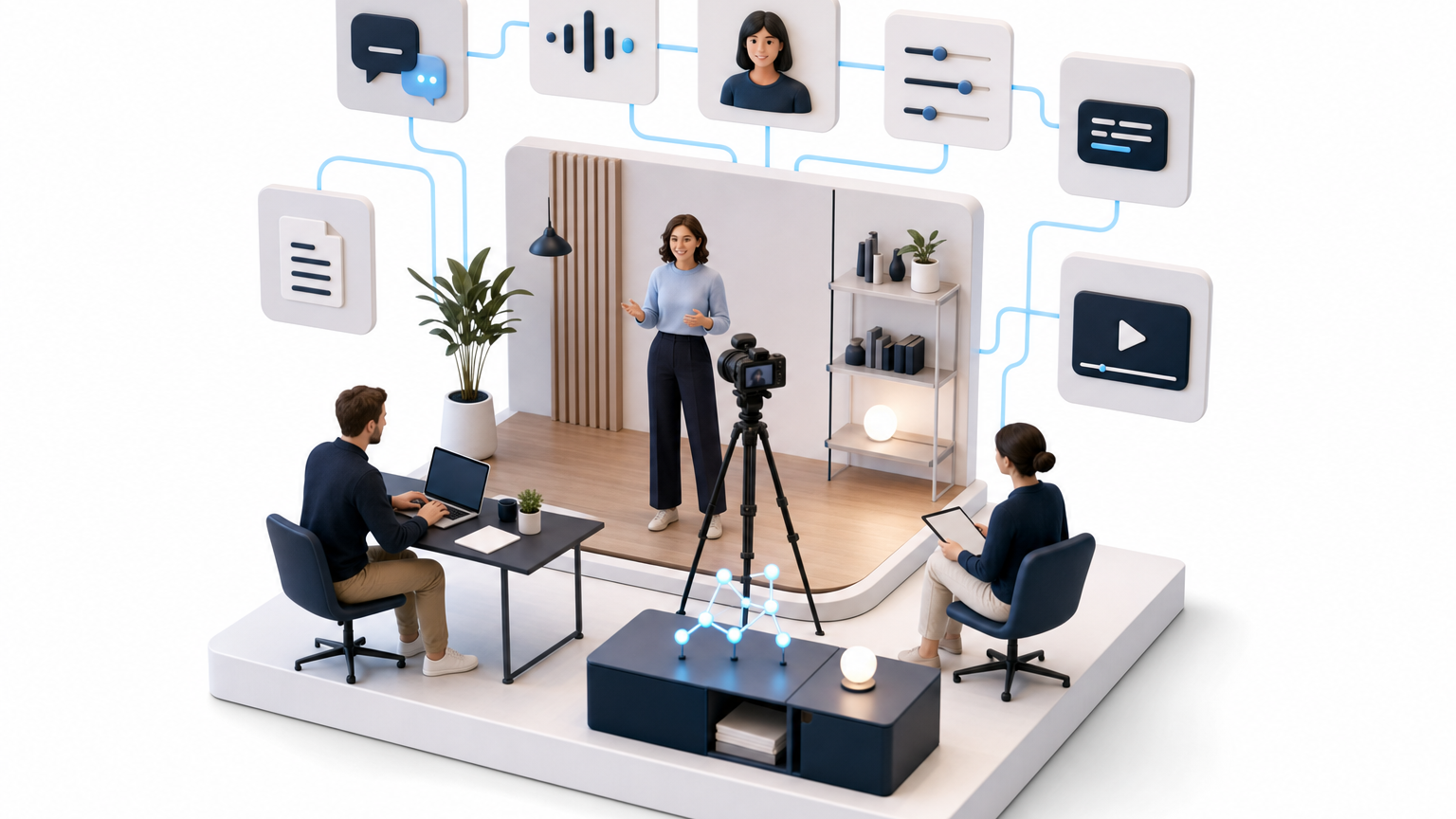
The market splits into four building blocks: text and script, voice, avatar or image generation, and editing. Some platforms bundle everything into one workflow, others stay specialised. For ad videos it pays to use a solution that joins script, voice and avatar and exports straight to the 9:16 format for Meta Ads, TikTok and YouTube Shorts. A continuous path from sentence to finished clip matters more than any single tool.

What does the workflow look like?
A reliable process has five steps: a clear script with a benefit promise in the first three seconds, a fitting voice, an avatar or generated images, the edit with subtitles, and a clear call to action at the end. The most common mistake is an intro that runs too long. On TikTok and in Reels the first second decides whether anyone keeps watching. Short, concrete and subtitled beats the elaborate glossy video with nothing to say almost every time.

How do AI videos compare on cost?
A classic ad spot with a shoot, editing and a voice actor quickly costs several thousand euros and takes weeks. An AI video for the same campaign is ready in minutes and at a fraction of the cost. The real lever is testing: produce ten variants instead of one and you find the ad that actually converts. With Meta ads, where a click averages under a euro, a better click-through rate makes the difference between loss and profit.
Where are the limits?
AI videos are strong at short, clearly defined formats. For long emotional stories or real people on camera, classic production often stays the better choice. There is also the disclosure duty: from 2 August 2026, AI-generated videos in the EU must be marked as artificially created. Plan for it from the start and you keep the speed of AI while staying legally clean.
Related articles
These posts help with the next decision.
- Meta Ads: a guide for small businesses
- Product and promo videos made easy
- UGC ads and UGC creators: what really works
How do you create an AI video?
In five steps: a script with a benefit promise, a voice, an avatar or generated images, the edit with subtitles, and a clear call to action. A continuous path from text to finished clip is key.
How do AI videos compare to classic production on cost?
A classic spot quickly costs several thousand euros and takes weeks. An AI video is ready in minutes and at a fraction of the cost, which above all makes it possible to test many variants.
Which formats suit AI videos?
Short, repeatable formats like ad clips for Meta and TikTok, product explainers and vertical posts. For long emotional stories, classic production often stays better.
Do AI videos have to be labelled?
Yes. From 2 August 2026, AI-generated videos in the EU must be marked as artificially created.